
Covered in ice
Light frost is normal in winter. A unit encased in ice or stuck in defrost is not.
One system that cools in July and heats in January. We install, repair and tune heat pumps for North Carolina's climate — with honest sizing and a price you see before any work starts.
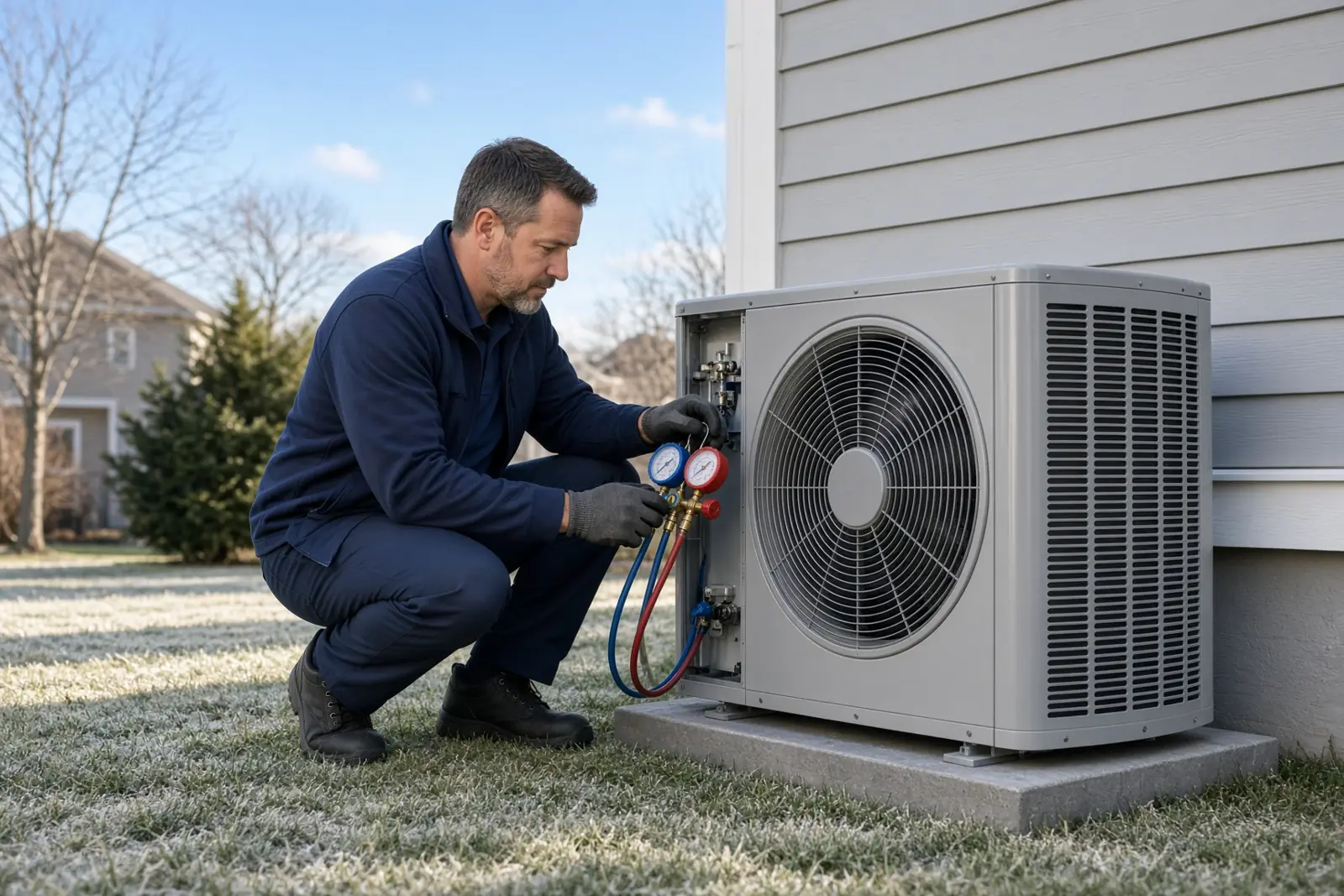
Signs your heat pump needs repair
Heat pumps work hard year-round in Cabarrus County. These are the warning signs we see most often.
Light frost is normal in winter. A unit encased in ice or stuck in defrost is not.
Lukewarm air on a cold morning can mean a reversing valve, refrigerant or defrost problem.
Backup heat strips running constantly will spike your power bill fast.
Turning on and off every few minutes wears out the compressor.
Fan motor or loose-panel noises should be checked before they get worse.
A heat pump losing efficiency costs more every single month.
Heat pumps in North Carolina
A heat pump doesn't burn fuel to make heat — it moves heat. In summer it pulls heat out of your home like an air conditioner; in winter it reverses and pulls heat in from the outdoor air. With Concord's mild winters, that makes it one of the most efficient ways to heat and cool a home.
On the coldest nights a heat pump gets help from backup heat — either electric heat strips or, in a dual-fuel setup, a gas furnace. Getting that balance right is what keeps bills low, and it's where a lot of installations go wrong.
If you already have natural gas, a dual-fuel system can give you the best of both. If you don't, a modern heat pump with properly sized backup heat is usually the simplest, most efficient choice. We'll compare both for your home — not a generic brochure.
Reviews
Related services
Also serving Huntersville, Mooresville, Cornelius, Matthews and Kannapolis — see all service areas.
FAQ
Talk to a technician: (980) 436-7390
Yes. Concord's winters are mild, which is exactly where heat pumps shine. On the coldest nights, backup heat (electric strips or a gas furnace in a dual-fuel system) helps keep the house warm.
Heat pump air feels cooler than furnace air, so some of it is normal. But truly cool air, or air that never warms up, can point to a defrost issue, a reversing valve problem or low refrigerant. A diagnostic will pinpoint it.
A light coat of frost in cold, damp weather is normal, and the unit should clear it in a defrost cycle. A unit covered in thick ice, or one that never defrosts, needs service.
Most heat pumps last around 10–15 years. Because they run in both summer and winter, regular maintenance makes a real difference in how long yours lasts.
It depends on the size of your home, efficiency level and whether ductwork or electrical changes are needed. Our in-home estimate is free and gives you a written price.
No heat or no AC?
Request a free installation estimate or book a repair. We'll call you to confirm a time window.
(980) 436-7390